Description
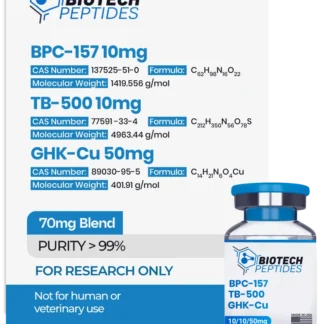
PeptideLabsDirect 70mg “Full System” Repair Blend: BPC-157, TB-500, & GHK-Cu
Look, you’re here because you’ve done the reading. You know what each of these peptides can do on its own. BPC for local repair, TB for systemic support, GHK-Cu for structure and skin. But you’re also smart enough to know that in the body, systems don’t work in isolation. They work together. That’s why we formulated this 70mg “Full System” blend. It’s not a magic bullet; it’s a coordinated research approach. Think of it as stacking your bench for a complex project.
This is a research-grade composite of three heavy-hitters, each with a distinct mechanistic profile, designed for in-vitro study of interconnected regenerative pathways. The goal is to model a multi-angled approach to cellular repair, angiogenesis, and extracellular matrix regulation. We don’t deal in hype, we deal in combinations that make scientific sense.
The Breakdown: What’s In The Vial
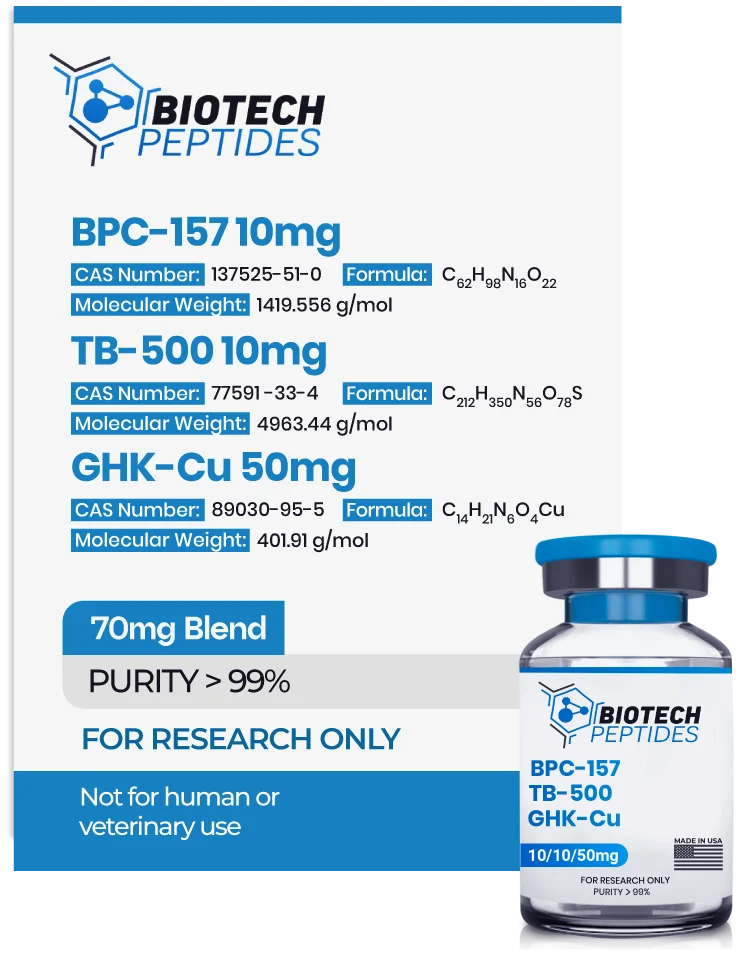
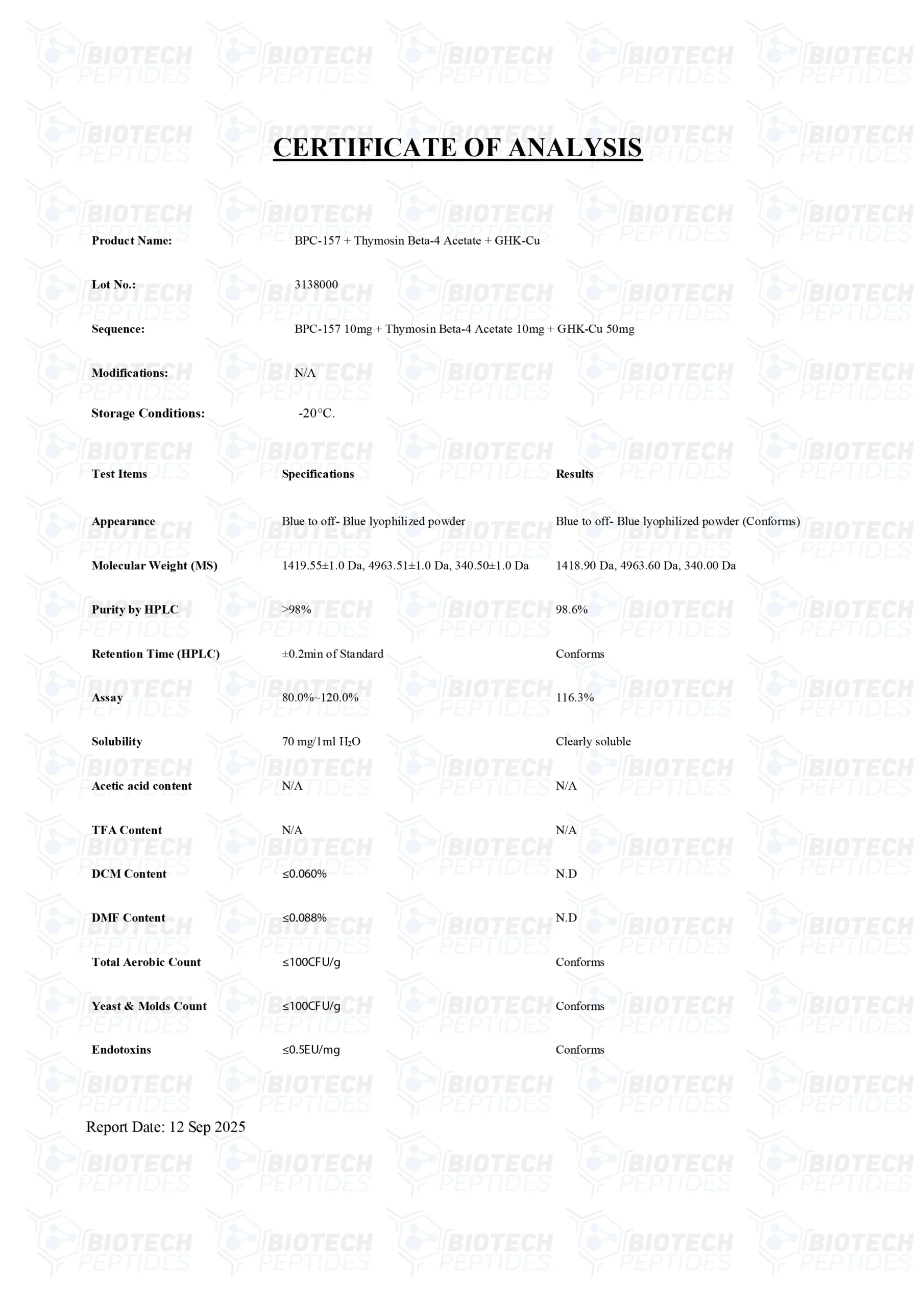
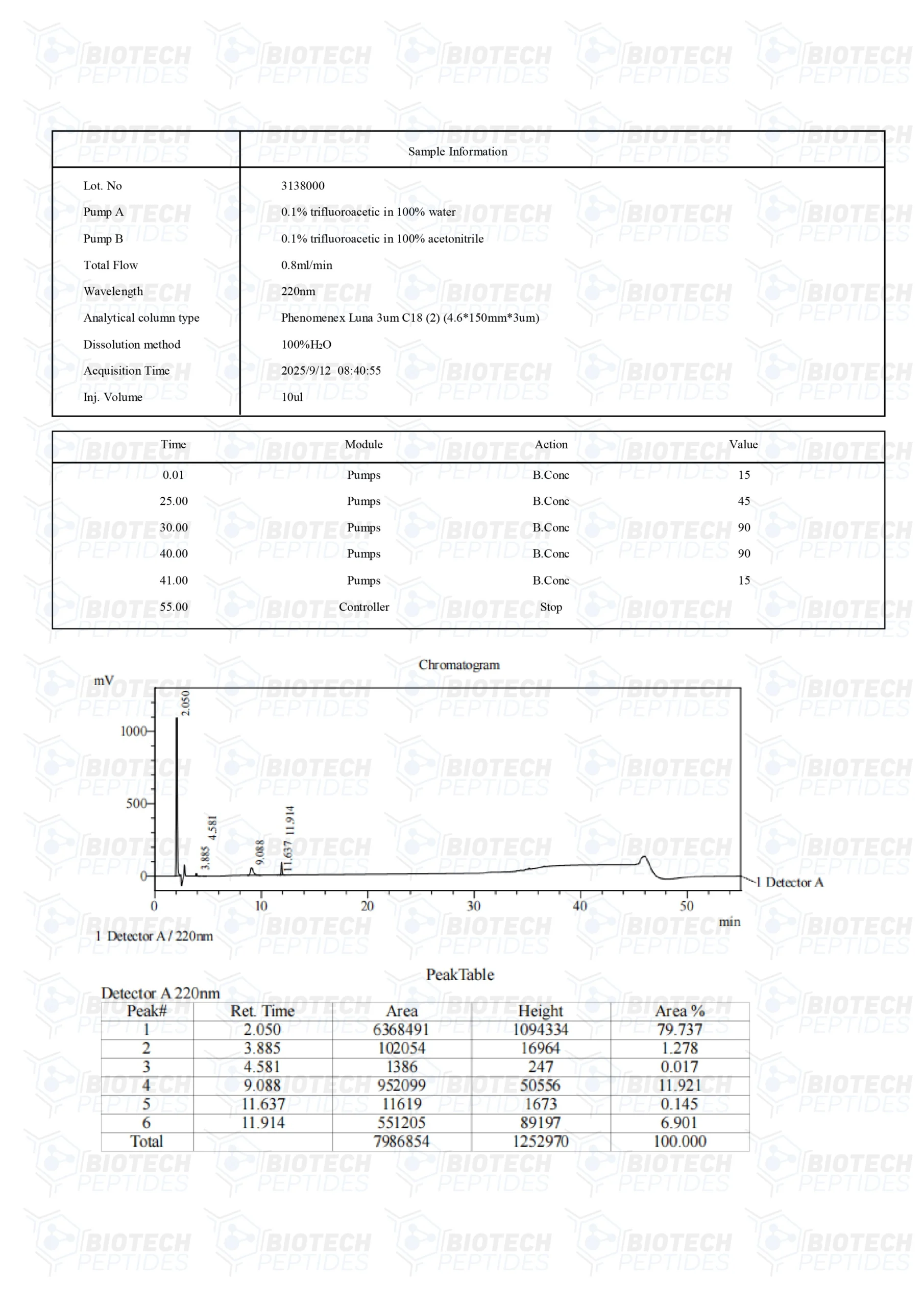
Every batch is mass-spec verified for purity and quantity. You get what’s on the label. No shortcuts.
- BPC-157 (15-amino acid sequence): Sourced for its noted role in modulating nitric oxide pathways and growth factor signaling. In vitro studies, like the one on tendon fibroblasts (Chang et al., 2011), suggest it may support cell survival under oxidative stress and promote migratory mechanisms critical to early repair phases. It’s a model for studying localized, site-specific regenerative signaling.
- TB-500 (Synthetic fragment of Thymosin Beta-4): This is your systemic player. Its research focus is on actin binding and cytoskeletal organization. It’s looked at for its potential to regulate cell migration and tissue remodeling on a broader scale. If BPC is the on-site foreman, TB-500 helps coordinate the supply lines and labor force across the whole site.
- GHK-Cu (Copper-Bound Tripeptide): This brings metal-peptide chemistry to the mix. Research examines its interaction with collagen synthesis and antioxidant enzyme activity (Pickart & Margolina, 2018). It’s a key model for studying the structural integrity of the repair process—the scaffolding and reinforcement phase. The copper complex is fundamental to its observed activity in redox signaling models.
The Rationale Behind The Stack
Combining these isn’t random. It’s about covering the repair process from multiple angles simultaneously in a research model.
Phase 1: Signal & Survive (BPC-157 + GHK-Cu). Initial response. BPC’s potential cytoprotective and angiogenic signaling is complemented by GHK-Cu’s observed role in modulating reactive oxygen species (Sakuma et al., 2018). This models a environment where cellular stress is managed, and repair signals are initiated.
Phase 2: Coordinate & Mobilize (TB-500 + BPC-157). Recruitment and organization. TB-500’s research into actin polymerization and cell migration works in concert with BPC-157’s observed promotion of fibroblast outgrowth and movement. This stage is about getting the necessary cellular machinery to the right location.
Phase 3: Rebuild & Strengthen (GHK-Cu + TB-500). Long-term structure. GHK-Cu’s association with collagen and extracellular matrix components pairs with TB-500’s ongoing role in tissue remodeling. This models the transition from initial repair to durable, organized tissue.
Separately, they’re powerful research tools. Combined in this specific 70mg ratio, they represent a sophisticated framework for studying how these pathways interact, potentially offering a more comprehensive model than single-compound studies.
Key Research Points (Your Ammo)
- BPC-157 has been observed in models to support tendon fibroblast migration and survival under stress, linked to paxillin and FAK signaling pathways (Chang et al., 2011).
- TB-500 (Thymosin Beta-4) research suggests a potential role in modulating inflammatory pathways via microRNA-146a, influencing key mediators like IRAK1 and TRAF6 (Santra et al., 2014).
- GHK-Cu in preclinical wound models showed supported tissue organization and repair characteristics compared to controls (Cangul et al., 2006). Its antioxidant activity appears selective for hydroxyl and peroxyl radicals.
Specifications & Handling
Format: 70mg blended lyophilized powder (sterile vial).
Storage: Stable at room temperature pre-reconstitution. After reconstitution with bacteriostatic water, store refrigerated and use within the stability window of the most fragile component.
Our Guarantee: Third-party verified purity. Every compound. Every batch. The COA is your proof.
CRITICAL NOTICE
This product is sold as a RESEARCH CHEMICAL for IN-VITRO LABORATORY USE ONLY by qualified, licensed professionals. It is NOT a drug, dietary supplement, or cosmetic. It is NOT for human or animal consumption, injection, or any form of bodily introduction. It is a tool for scientific study under controlled conditions. Handle all laboratory materials appropriately using PPE and proper sterile technique. You are responsible for knowing and complying with all local, state, and federal regulations regarding the purchase, handling, and use of research peptides.
Bottom Line: For researchers modeling complex, multi-pathway regenerative processes, this blend offers a logical, potent, and verifiable combination. It’s for when you need to look at the whole system, not just one piece.
PeptideLabsDirect. No fluff. Just compounds that work.
Reviews
There are no reviews yet.